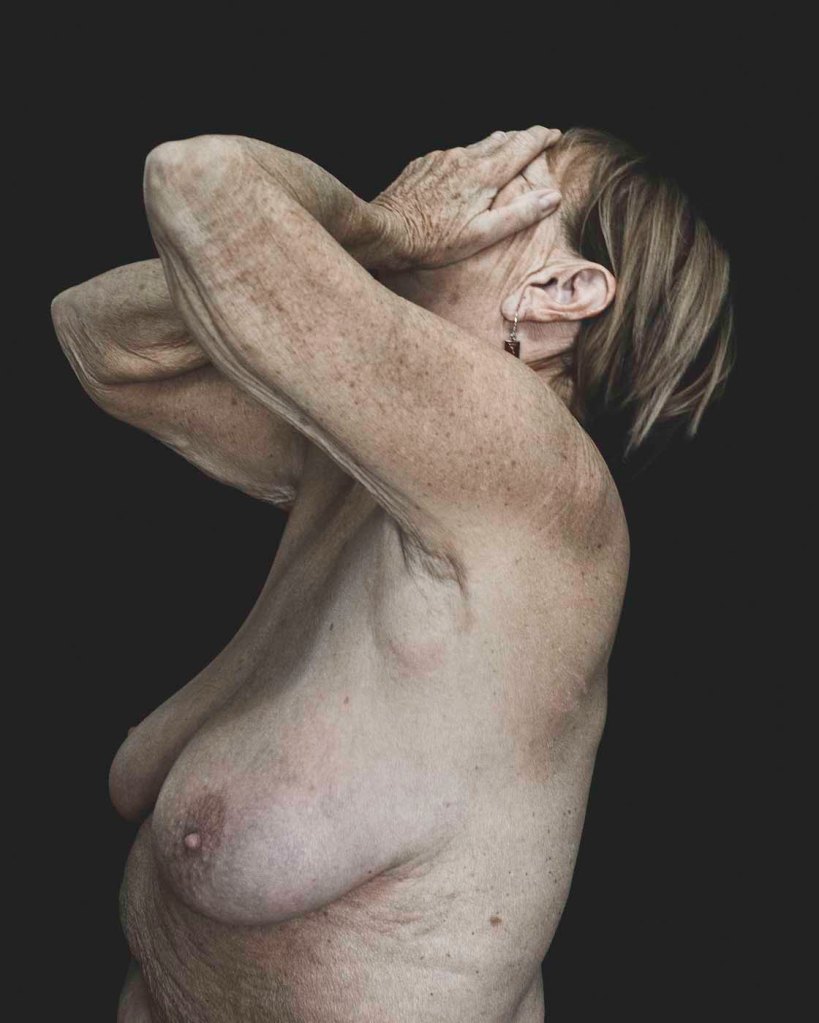
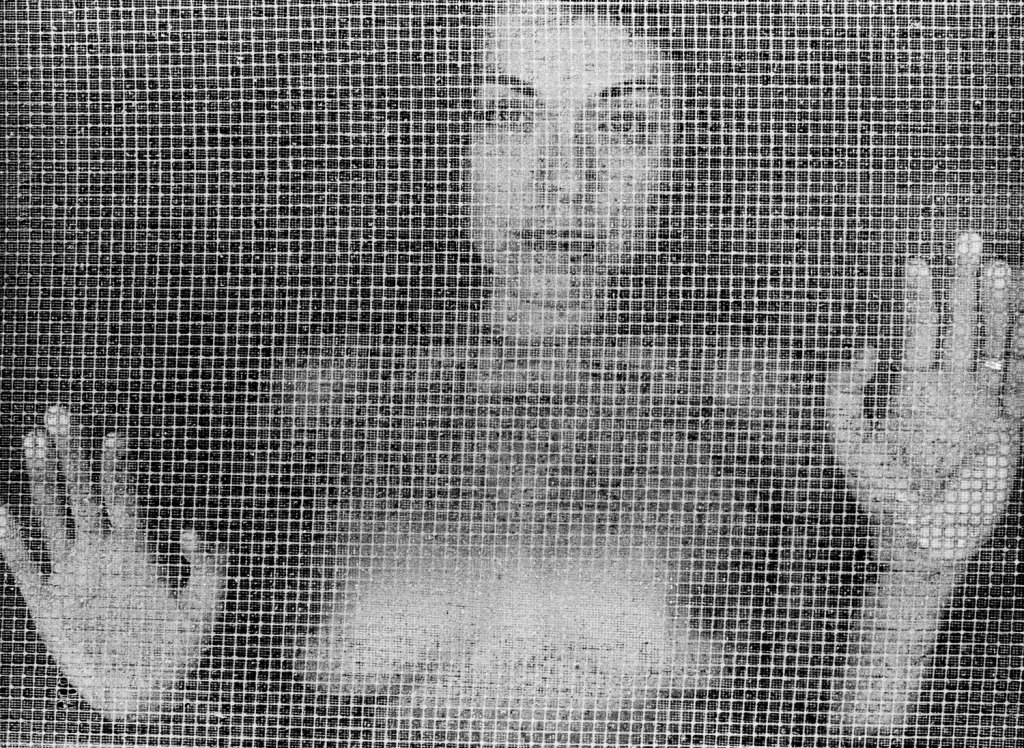
“The notion of the ‘unconscious’ is a source of continuous fascination and threat. It is fascinating because it signifies something unknown about ourselves that renders us more mysterious and unfathomable than our (often mundane) appearance would suggest. It is threatening because the absence of consciousness implies to most people an absence of control—the quintessential hazard and indignity.” This quote is from the book Theories of the Unconscious and Theories of the Self by Raphael Stern.
In addition to the term unconscious, that state of existence beyond the realm of consciousness has been referred to as the sleeping mind, inner world, soul, imagination, spiritual contact, gap, the unknown, and intuitive awareness.
It is my belief that there is an influence on my personal photography, which is beyond the level of conscious thought. I have also discovered that this phenomenon has been experienced by others in photography and art.
The brain and human consciousness has been and continues to be of special interest to the scientific community. On one side of the spectrum is the recognition of a state called the unconscious, which is clothed in mystery and magic where Sigmund Freud analyzed dreams and Carl Jung spoke of the “collective unconscious.” At the other end are neuroscientists and cognitive studies experts such as Daniel Dennett and William Calvin, who attempt to explain the operation of the human brain and the mechanics of consciousness.
Despite numerous theories of the unconscious and recent discoveries into how we think, I have not found a more convincing conclusion than when the English author Thomas DeQuincey (1785-1859) wrote: “The machinery for dreaming planted in the human brain was not planted for nothing. That faculty, in alliance with the mystery of darkness, is the one great tube through which man communicates with the shadowy. And the dreaming organ in connection with the heart, the eye and the ear, composes the magnificent apparatus which forces the infinite into the chambers of a human brain, and throws dark reflections from eternities below all life upon the mirrors of that mysterious camera obscura—the sleeping mind.”
The brain is a fantastic storage instrument with many levels of information capacity. Genetics certainly play a major role in how our brains are “wired.” I think the assumption has been that a brain is a brain, and in its basic sense there is little difference in composition between individuals, and that changes occur as we absorb the world from infancy. But I believe that brains are as different as people’s faces. Certainly, our individual life experiences impact and define our existence. Also, trauma to the brain can change everything. But your brain will seek out, filter, and store things differently than my brain. The same identical information will not be stored the same for both of us. Information (which includes experience) is stored at different levels of awareness. The information at the conscious level is readily available. At the other extreme are the instinctual life and survival commands, which we do not consciously control or have access to. In between there are various mixes of information (learned and that imprinted from birth) and levels of recall.
Now the part that can make this more complicated is the role language plays in this overall picture. Since language is relatively new in our human evolution and the visual basis of our existence has been with us much longer, the argument can be made that there is stored information which we can translate visually but cannot easily (or perhaps not at all) put into words. Our visual being is far more advanced than our verbal being.
Over the years I have discovered a common thread relating to the unconscious running through the work of a number of artists. Before discussing specific artists I do want to address “surrealism.” Surrealism was an artistic movement that held the belief that the subconscious was an instrument of expression which combined the world of dream and fantasy with the everyday world. A means of reuniting the conscious and unconscious worlds. Andre Breton, a poet and critic, addressed the issues in The Surrealist Manifesto in 1924. His theories stemmed from the writings of Sigmund Freud. I tend to separate my ideas about the unconscious from the surrealist movement because it is about artists who are not a part of a movement and who don’t make a conscious effort to be unconsciously aware when producing their work. The process just happens.
Marcel Duchamp (1887-1968), the notorious painter, constructor, and originator of ready-mades, had a career that intersected with the surreal movement, but he appeared to be too independent to be a part of any specific group. Duchamp spoke of the “esthetic echo.” In Duchamp, A Biography, Calvin Tomkins writes: “On several occasions Duchamp was asked to clarify his concept of the “esthetic echo,” which had intrigued the others when he proposed it at the first session. Works of art could not be understood by the intellect, he maintained, nor could their effect be conveyed in words. The only valid approach to them was through an emotion that had ‘some analogy with a religious faith or a sexual attraction—an esthetic echo.’ This echo, however, was heard and appreciated by very few people. It could not be learned—either you had it or you did not—and it had nothing whatsoever to do with taste, which was merely a parroting of established opinion.”
The spontaneous nature of photography makes it a perfect tool in tapping the unconscious. The difficulty is in making the right connection between the physical and mental worlds. Minor White spoke the following in 1959: “I understand very well what Freud meant by the little ‘gap’ in consciousness during the creative act, because when I maintain the mental atmosphere in which revelation can occur, the instants of intuitive grasp always seem to emerge from an element of blank. Depth psychologists interpret this ‘gap’ or blank as the brief period when the depth mind, which is inarticulate, overrides the articulate surface mind.” The depth mind cannot verbalize and for the most part the overall experience is a brief and fleeting moment in time.
Clarence John Laughlin (1905-1985) wrote a great deal about his thoughts on the creative process. He stated: “My central position, therefore, is one of extreme romanticism—the concept of ‘reality’ as being, innately, mystery and magic; the intuitive awareness of the power of the ‘unknown’—which human beings are afraid to realize, and which none of their religious and intellectual systems can really take into account. The romanticism revolves upon the feeling that the world is far stranger than we think; that the ‘reality’ we think we know is only a small part of a ‘total reality’; and that the human imagination is the key to this hidden, and more inclusive, ‘reality.’”
He also wrote: “You don’t go out to accidentally find something that’s going to make a good picture, but [instead, you find it] in yourself, knowing already what you want to do…at least subconsciously if not consciously; you find the thing in so-called nature or so-called reality which corresponds to this preconceived, this pre-sensitized, concept, which is hidden somewhere in your imagination or subconscious…You go out and find what you are already prepared to see.”
The last two photographers I want to discuss are Bill Brandt (1904-1983) and Ralph Eugene Meatyard (1925-1972). Neither photographer wrote much about their images or image making, but in monographs on each person the essayist speaks about the workings of the mind beyond the conscious level in image making. David Jacobs says of Meatyard: “There are various ways to explain Meatyard’s pervasive silence. As he developed his distinctive vision in the early 1960‘s—one that centered around the images of his children with props and masks—perhaps the need for self-defining discourse diminished. Or he may have felt that the images lay beyond his powers of verbal articulation. And, too, he may not have known himself what some of his images meant or where they came from.”
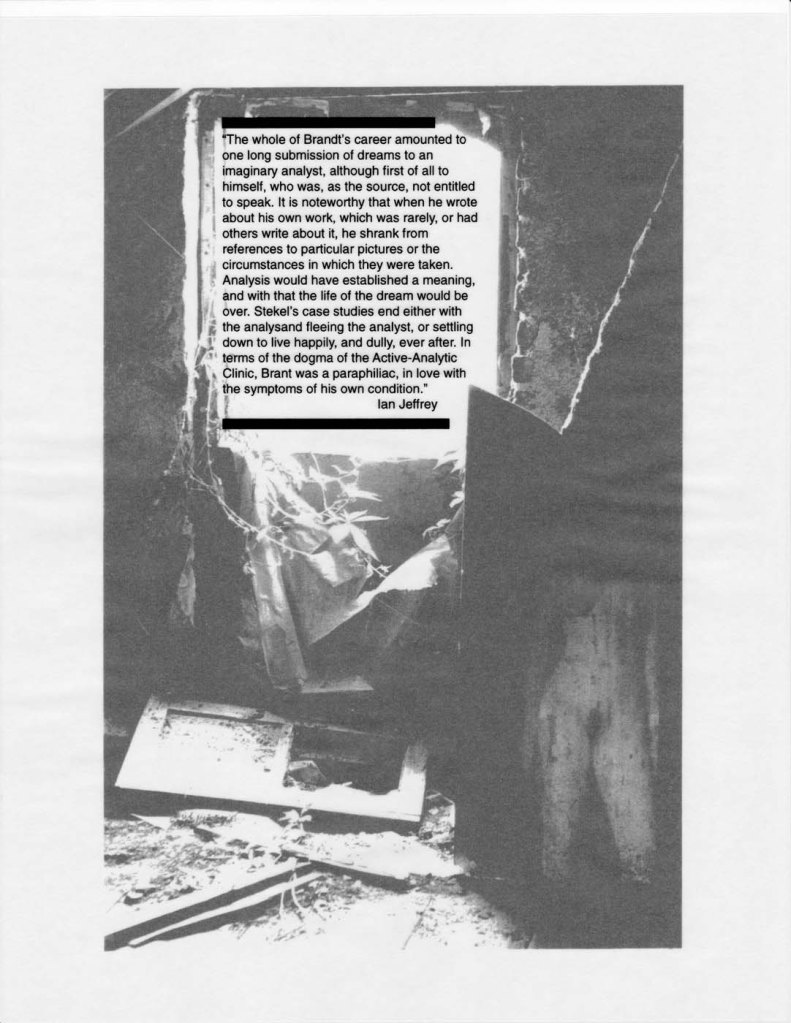
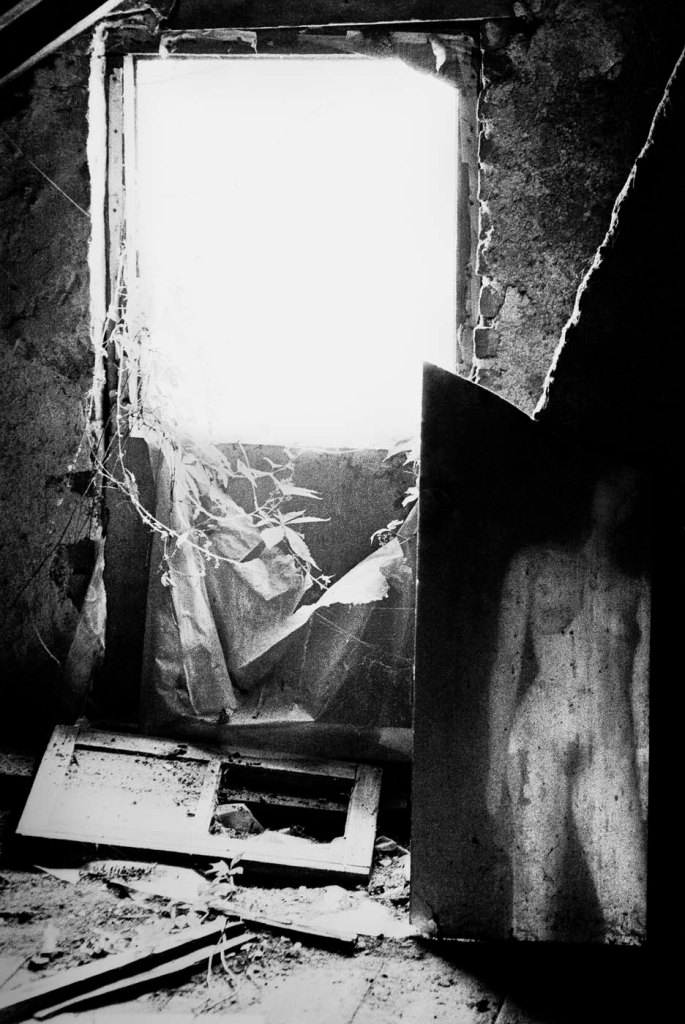
The quote by Thomas DeQuincey used earlier was contained in the introduction written by Michael Hiley for Photographs by Bill Brandt: Nudes 1945-80. Brandt’s images provide one of the best insights into the overall workings of the other-than-conscious level of creative thought. Hiley writes, “He [Brandt] conveys these ‘messages from another world’ by means of disturbing images which heighten our sense of reality and yet at the same time question it, as they are suffused with an all-pervading sense of otherness.” Of all the photographers whose images I have seen and especially those who worked with the nude, I feel the closest to Brandt in the origins of our images. Origins refers to our thinking process, emotional makeup, creative impulses, and other basic instincts. On a conscious level, I am fascinated by his injection of mystery, the use of light and space, and the ambiguity of narrative content, which provides more room for interpretation. Hiley also wrote, “Apart from the technical skills and acuteness of vision demanded, Brandt’s ability to explore the subconscious is no ordinary gift. As DeQuincey says: ‘Habitually to dream magnificently a man must have a constitutional determination to reverie.”
One of my first significant influences came not from photography, but from philosophy. Gaston Bachelard (1884-1962), in The Poetics of Space uses the study of poetry to reach into the depths of man’s imagination. This is all done in the context of the examination of intimate spaces including the house, shells, nests, and corners. I certainly can’t do justice to his writings in a short summary, but a passage or two that directly relate to this essay may at the least support my position. Bachelard writes: “Later, when I shall have occasion to mention the relation of a new poetic image to an archetype lying dormant in the depths of the unconscious, I shall have to make it understood that this relation is not, properly speaking, a causal one. The poetic image is not subject to an inner thrust. It is not an echo of the past. On the contrary: through the brilliance of an image, the distant past resounds with echoes, and it is hard to know at what depth these echoes will reverberate and die away.”
He speaks of how “The poetic image places us at the origin of the speaking being,” and how “the image has touched the depths before it stirs the surface.” If Bachelard is correct—that the poetic image can stir the origins of our verbal existence—then it makes sense that the photographic image (and the other visual arts) can take us back before our verbal days into our origin of the visual depths.
When I photograph, I have always felt the instant I snap the shutter is my most creative moment. It is the moment that my external vision and internal thought coalesce. At the conscious level I do communicate with myself about the technical aspects of photography, but my goal is to resolve any of these concerns quickly so that I can fully concentrate on the visual elements before me. Unexpected and accidental visual discoveries result in my best work. My approach relies on the serendipitous. Pre-conceptualization is the least effective for my image making. I am sure that I am not unique in my approach and that there have been, are, and will continue to be many who create images from the many layers of unconscious thought. Images that defy verbalization.
The study of conscious and unconscious thought will ultimately lead to discoveries that determine it is not as mysterious as some have maintained nor as scientific as others would like it to be. There will be further findings on how information is stored and retrieved and mappings that pinpoint where certain thought activities occur. But I also like to think that the brain holds answers to our existence which are undiscoverable and that only through creative moments do we get a glimpse into that area which is beyond conscious thought.