I was in the middle of a photo session with a model when I realized I had too many cameras and that was having a negative impact on my photo concentration. I was using a digital camera and a film camera and would switch between them. I feel that my photography suffered from this. My original thinking was that working with multiple cameras would give me an advantage and provide a wider selection of good images. It was the opposite result. I would still get an occasional good image but the overall results were disappointing. Flipping between cameras had a negative impact on my visual and mental concentration. My brain would have to recalibrate between digital (color) and film (black and white). Also, when working with a model, the time gap while changing cameras can have a negative impact on the overall flow and rhythm of the session. I had strayed from my personal philosophy of keeping things simple.
For a photographer, photo equipment is obviously necessary but too much equipment can be a photographers curse. It is very easy to get caught up in the equipment trap. You see a new camera and think “if only I had that new camera my photographs would be so much better.” Or you see reviews about the next great camera and you get that itch that you need a new camera. Unless your camera is broken you do not need an expensive new one. Your best photos are created by your eyes and brain.
Many years ago, when I began making photos, there were only film cameras. The big decision as a photographer had to make was what type of film to use.
My first new single lens reflex camera was a Ricoh XR-M with two lenses consisting of a wide-angle (28mm) and a normal lens (50mm). It was an excellent camera and I used it for many years and made some of my best photos with it.
My plan is to go back to my early days and simplify my use of equipment. For a specific photo session, I will make a decision on one camera to use and will have to work within the parameters of that camera. I am also issuing a self-imposed moratorium on purchasing new cameras. Unless I have to replace a broken camera, I have purchased my last camera. For me less will be more in the sense that I hope I can get back into the photo groove I had when I first started my adventures in photography.
My previous post was titled “Being an Aging Photographer”. Related to this topic, I just finished reading “Everything is Photograph: A Life of André Kertész” by Patricia Albers. Kertész died in 1985 at the age of 91. He continued to photograph throughout his life and played a major role in the history of photography. His photographic life is inspiring to me. As he aged, he found new ways to adapt as he continued to create his images. An example is that when his vision started to deteriorate and he was not as physically mobile, he started to use a Polaroid SX-70 camera which had auto-focus and provided an instant image which saved him from having to go to a camera shop to get his film developed and printed. He also used view cameras during his career but adopted the Leica after its introduction because it was easy to carry around and great for his style of photography.
Being open to change and adapting to your environment seem to be the keys to a long photographic life. I still use film for a lot of my image making but I also use digital to keep current. My black and white film work is a hybrid process where I develop my own film and digitally scan what I think are the best images. I then digitally process the image and archivally print it on a digital printer. Working with film can be a challenging process but I still like the way that black and white film images look.
I noted in my previous post that it seemed that my camera bag was gaining weight. Of course, in reality it is feeling heavier as I get older. In order to adapt, I recently purchased a Ricoh GR IV monochrome digital camera. This camera only produces black and white images. For me, as I get older, the GR monochrome may be a transition camera from my larger and heavier cameras. I have been impressed with the test shots. I have also been using a vintage Olympus Infinity Stylus Epic film camera which I believe was popular in the 1990’s. This is a compact pocket camera in which I use black and white film. I can carry both cameras together in a small camera bag.
These cameras currently seem to be an excellent combination at this time in my life because of their size and ability to make black and white images. For many and maybe most photographers, these cameras would not be appropriate for the type of images they prefer to make. Each photographer must find what works best for them. That’s one of the great things about photography—it can adapt to many different styles and needs.
One of my first test images with my Ricoh GR IV monochrome camera.
Olympus Infinity Stylus Epic film camera (blue toned black and white image)
I am a photographer who is aging and I have first-hand experience of the changes that occur as you get older. The physical changes are the most obvious but there are related psychological changes. Despite these changes due to aging, I believe we have the ability to adapt to these changes.
I’ve been a photographer for over 50 years but I did not make my living from photography although I was an adjunct instructor in photography for 14 years. I consider myself a “fine-art” photographer and naturally my experience is from that perspective.
Let’s begin with physical changes as you age. I will address three areas: mobility, strength, and vision. First, I encourage all photographers to exercise and keep in the best condition that is appropriate for them. Start when you are young and keep working at it. I’ve been fortunate that I’ve been able to maintain my health into my 70’s but it is not easy and it does take discipline. I do some form of exercise daily consisting of either walking, running or light weight resistance lifting. You should design a routine that fits your abilities. View it as a lifetime commitment. Despite my exercise routine, I have experienced the impact of aging as it relates to photography.
For my style of photography, I do a lot of squatting and bending. Sometimes I lie of the ground or stand on a step ladder for a better and more interesting angle. I have noticed that I am not as nimble nor as flexible as I was when younger. I can still get up off the floor but it is not a graceful thing. Balance is more challenging now when on a step ladder trying to get that special shot. The solution is to stay upright and stay off ladders. This is easier said than done because the photographer in me does not want to miss a potential image.
I have also recently started to notice the weight of my camera bag on my shoulder. I use a quality camera bag and I don’t carry a lot of equipment but the bag seems to get heavier each year. My primary equipment is a full-frame DSLR and an old fixed lens medium format rangefinder film camera. When I want to lighten the load, I switch to smaller lighter compact cameras but I do compromise some quality and flexibility.
Vision is essential for a photographer and is impacted with age. For many years, I used manual focus cameras and did not need glasses. I started using autofocus cameras when there was some degradation in my vision and I started wearing glasses. Thanks to advances in medical science, conditions like cataracts can be corrected and other eye problems can be treated. In my case, I have an eye with a cloudy cornea caused by a disease. My vision in that eye is very poor and my depth perception is limited. I see the world as flat instead on in 3-D. Perfect for 2-D photography. I recommend that everyone see an ophthalmologist on a regular basis so that potentially serious eyes issues can be detected early and any necessary treatment implemented.
Let’s take a look at psychological changes that can affect an aging photographer. For me, motivation seems to have decreased with age. I don’t have the “gung-ho” attitude that a younger me possessed. I used to feel guilty if I didn’t arrange photo sessions with models on a regular basis and I constantly sought out interesting locations and I was driven to find something worthy to photograph. I worked with models on a frequent basis and spent days in the darkroom processing and printing the negatives. I am still an active photographer but my output, which has always been somewhat limited has been reduced further.
Creativity is another important psychological attribute which can fluctuate throughout your life and that becomes even more elusive with age. It doesn’t disappear but for me the flashes of creativity aren’t as frequent. I have spent a lot of time thinking and writing about creativity over the years. For instance, I wrote the following:
“Creativity is a fickle thing. It comes and goes. It is elusive. As a photographer, I have learned to embrace the times creativity is with me and endure the periods when it is absent. There is no way to predict its emergence or its subsequent submergence back into the murky waters of the mind. Sometimes I do not know when I am in a highly creative period until it is over. Unfortunately, I do know when my creativity goes in hiding. This is when frustration sets in and I wonder if I have lost my ability to create photographs. But even in these times, I will continue to forge ahead and photograph with the hope that something will bubble to the surface. I sometimes wish I knew where creativity went to hide and could recall it with a photographic magic spell.”
As I age, I question my skills and ability as a photographer. I have always had some self-doubt which is probably a normal thing but it seems such thinking increases with age. Are my best days passed? I hope not. I continue to pursue the elusive images and keep hoping there will be a creative breakthrough. Plus, I keep surprising myself with new images which keeps me motivated.
Related to diminished skills is a diminished memory or at least one that does not work as good as it used to. I find as I age that I need to reinforce my memory on camera operation and photographic software usage. I sometimes forget a function on my camera and have to go to the camera manual. Part of this might be due to the overly complicated options available on the modern cameras but I also realize that I cannot recall something that I should know. The same goes for computer photo processing programs. I find that I have to keep my workflow streamlined and simple. I may not be using the latest digital techniques but I still produce excellent prints.
As an aging photographer, adaptation is essential. I still like to use film but I do not print in a darkroom. My solution is that I develop film in a bathroom and then digitally scan the negatives and finally digitally process the scanned images and print them on a digital printer.
Aging is a fact of life. I have tried to address some of the changes that I have been facing as a photographer. On the physical side, I highlighted mobility, strength and vision. On the psychological side, I focused on motivation, creativity, self-doubt and memory.
I think that by recognizing your limitations you can make adjustments and adapt to these changes. Photography can be beneficial to you both physically and psychologically. There is no reason you cannot experience a rewarding photography experience throughout your lifetime. Keeping a positive attitude is essential and creating exceptional images is the goal.
Analog photography is very tactual. I recently was loading large format sheet film into 8 by 10inch film holders which I use in my pinhole camera. It is a very tactile process since it has to be done in total darkness and involves the sense of touch. The film has notches in one of the corners which identify the type of film and also indicates which side is the emulsion side (which has to face out). The dark slide which covers the unexposed film until ready to be used has little bumps along the silver side the top edge which indicates that the film under that side of the slide is unexposed and ready to be used. The other side is black with no notches and this indicates that this film has been exposed. Sounds complicated but the point is that touch is integral to the process.
After I was done loading the film holders, I realized how much I enjoy the tactile sensations experienced in analog photography. The tactile sensations continue through taking the photographs and processing the negatives. Touch is involved in every step.
Whether you are using large format film, medium format or 35mm, touch is essential. Loading exposed film in the dark into a film developing tank in preparation for processing requires touch and dexterity. I use stainless steel developing tanks and reels and I find that the cool smooth touch of the metal is pleasurable.
It is obvious that analog photography has many more opportunities for tactile stimulation than digital photography. I also use digital capture and processing. Sight rather than touch is the most valuable sense in digital photography. Loading and unloading a memory card along with using a computer screen, a mouse and keyboard is basically the tactual highlights. Touching photo paper is the most tactual thing I do in digital.
Over the decades, I feel that my analog work is far better than my best digital work. I recently attended the NiNPAH (Nude in Nature Photo Art Haven) event where I worked with two models for two hours each. I decided to only use black and white film. I exposed two rolls of 36 exposures with each model which is my usual shooting pace. When working in black and white, I visually interpret the scene into a gray scale. I even prefer to watch old television shows and movies that were filmed in glorious black and white. For me, color photography requires a different mindset and is visually less fulfilling than black and white photography.
For me, the tactility of analog photography has no comparison with digital photography. Perhaps that is why there has recently been more interest in analog. People want more of a hands-on approach. I admit that there are many ways to mess up throughout the analog process. I have made what is probably every mistake possible but that is part of the challenge and the results are rewarding.
I can see why most people prefer digital. It is more full-proof (although I have managed to find ways to screw up).
My final argument for analog is that film cameras are less complicated than digital. My Nikon F100 film camera manual has 111 pages. My Fujifilm 645i medium format film camera is 39 pages. My Nikon D750 digital camera manual is 504 pages. In my analog influenced opinion, digital did not make photography easier.
Digital photography is here to stay for now. I only hope that a small space will continue to exist for the few who still use analog photography and value its tactility.
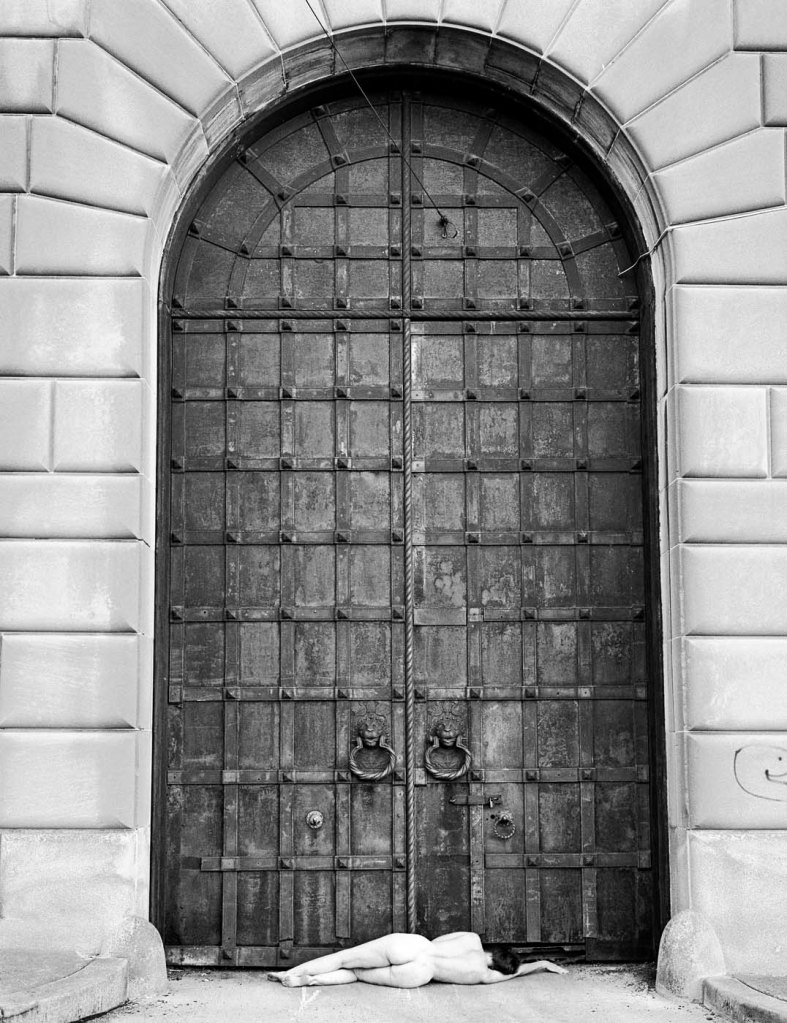
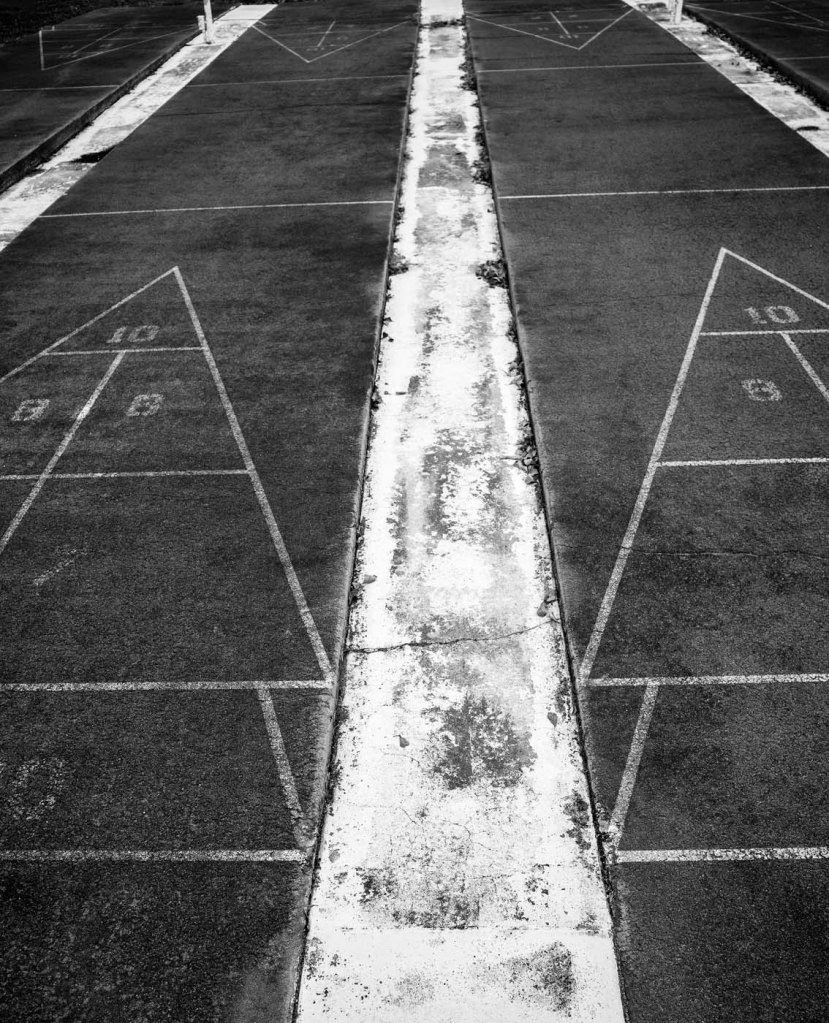
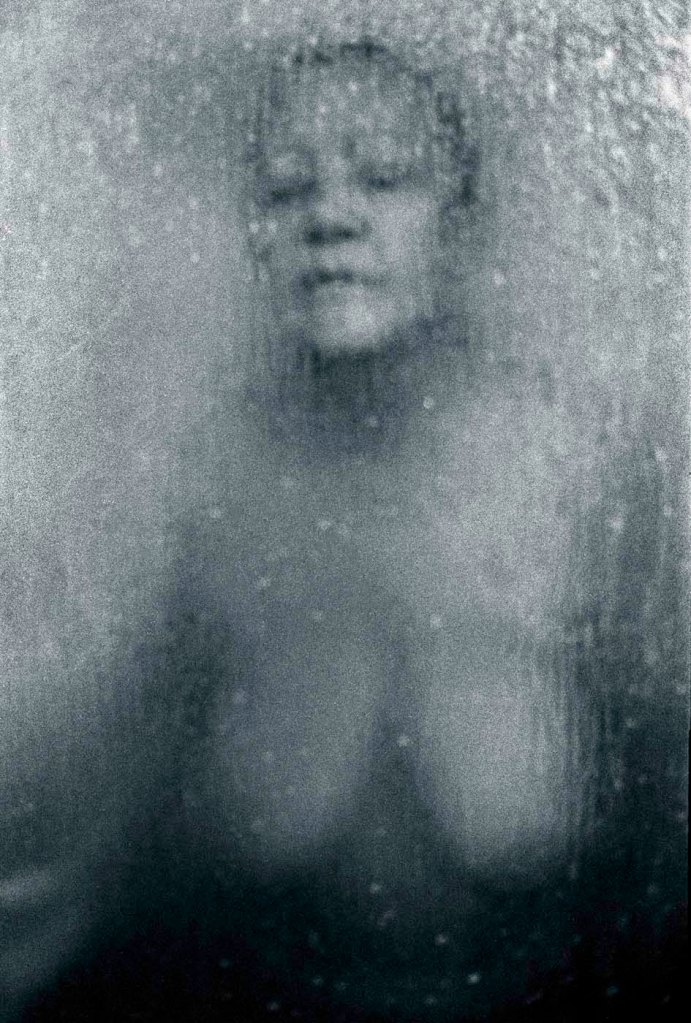
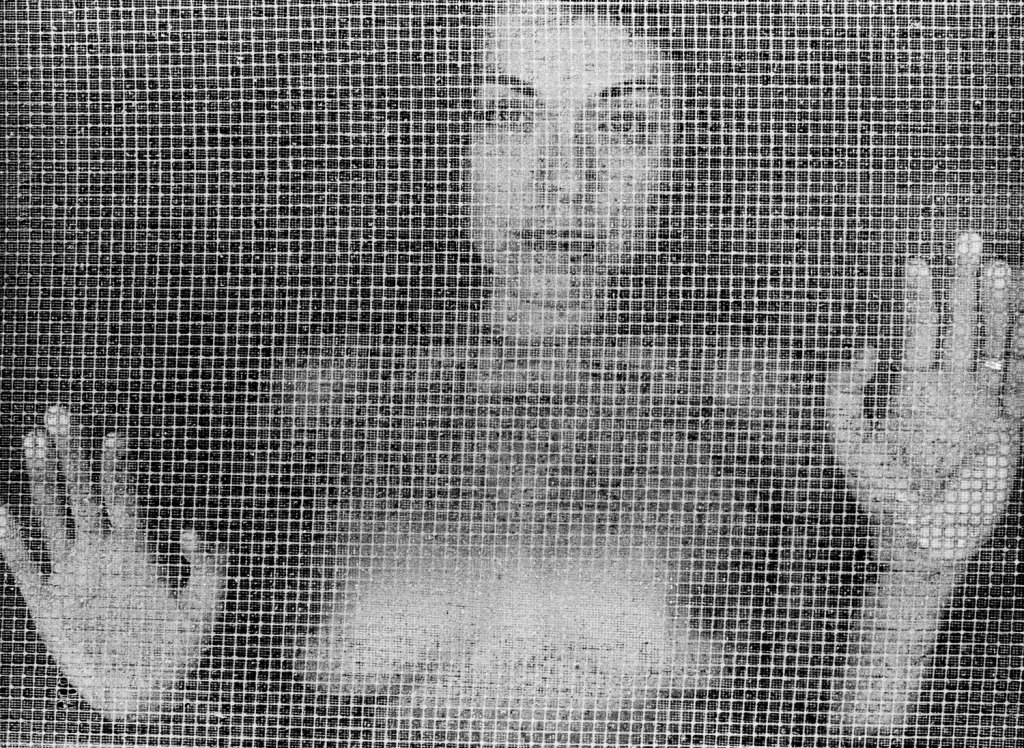
A recent black and white photograph. All images copyrighted.
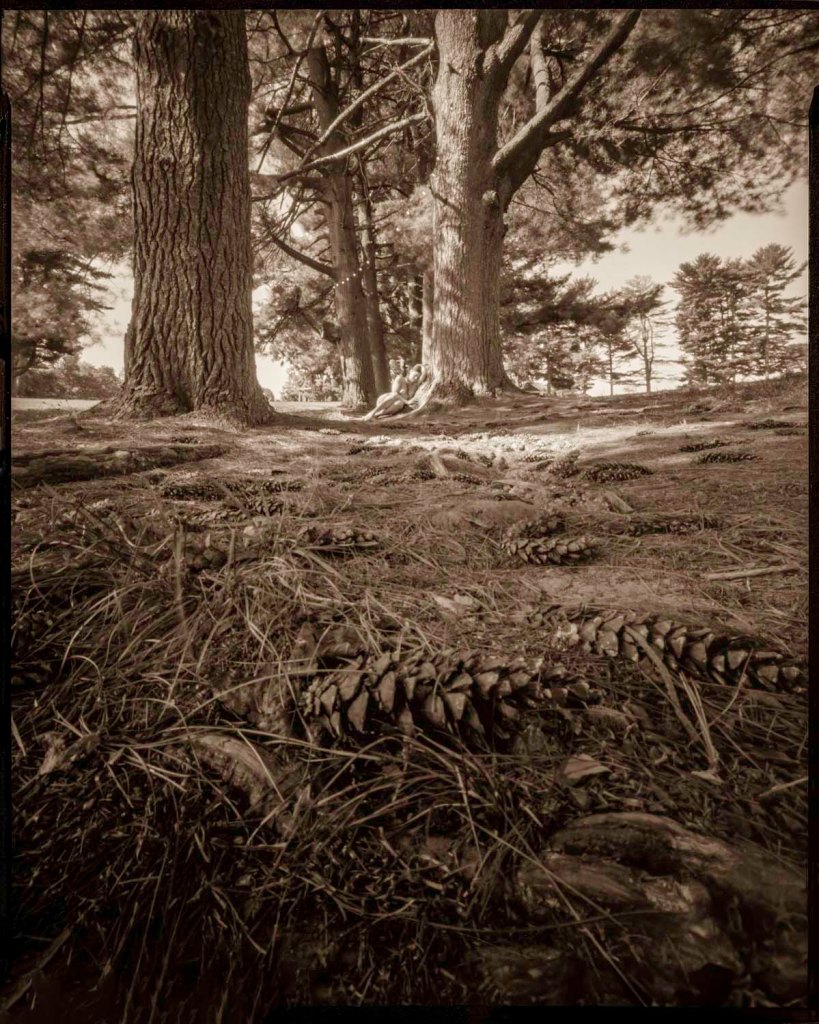
It has been two years since I last used my pinhole camera. I made the camera over twenty years ago. It is made out of plywood, a little bit of foam rubber insulation, and a lot of black duct tape to help make it light tight. I use old film holders that I load with 8-inch by 10-inch black and white sheet film. I used brass shim stock and a #9 sewing needle to make the actual pinhole. A friend gave me an old Packard-Ideal shutter that uses a pneumatic bulb attached to a tube to open and close the shutter. I installed small levels on two sides to help keep the camera level. I use a hand- held light meter to get an initial reading but also use a reciprocity chart to help compute a more accurate exposure time. Exposure times are usually in the 7-20 second range which means the subject must try not to move while the film is being exposed. Film has become very costly. A box of 25 sheets is now over $200 US which means that each exposure is $8 per sheet of film.
There are many challenges when using this camera and numerous ways to ruin a sheet of film. Exposures have to be accurate and subjects have to stay very still. There is the threat that a light leak may ruin an image. I have also gotten careless and forgot to return the slide back into the film holder and the film is totally ruined. I have had the shutter not fully open or close which results in another failure. Also, using the pinhole camera requires extra time to set up and post-processing the film can take hours. There is no guarantee that a good image will result from my efforts. I have no idea what I have until the film is developed.
With the potential for failure, the high costs, and the challenges to making a good photograph, the question is: Why do I use a pinhole camera?
First, I like the way the images look. There is a dream-like softness and ethereal quality to the images. Part of this may be due to the fact there is never a super sharp focus like you get using a camera with a lens. Another quality is there is an infinite depth-of-field from the closest to the farthest object. The angle of view for my camera is very wide. I like the resulting distortion which can make items close to the camera appear stretched. Sometimes accidental movement by the model can add to an image and even an accidental light leak can occasionally benefit an image. I like working with large format film and I like the uncertainty of the results. I set everything up and hope for the best.
Despite all the negative aspects of using the pinhole camera, when everything goes right the resulting photograph is special and one of a kind. It can even be magical.