Adaptation

My previous post was titled “Being an Aging Photographer”. Related to this topic, I just finished reading “Everything is Photograph: A Life of André Kertész” by Patricia Albers. Kertész died in 1985 at the age of 91. He continued to photograph throughout his life and played a major role in the history of photography. His photographic life is inspiring to me. As he aged, he found new ways to adapt as he continued to create his images. An example is that when his vision started to deteriorate and he was not as physically mobile, he started to use a Polaroid SX-70 camera which had auto-focus and provided an instant image which saved him from having to go to a camera shop to get his film developed and printed. He also used view cameras during his career but adopted the Leica after its introduction because it was easy to carry around and great for his style of photography.

Being open to change and adapting to your environment seem to be the keys to a long photographic life. I still use film for a lot of my image making but I also use digital to keep current. My black and white film work is a hybrid process where I develop my own film and digitally scan what I think are the best images. I then digitally process the image and archivally print it on a digital printer. Working with film can be a challenging process but I still like the way that black and white film images look.

I noted in my previous post that it seemed that my camera bag was gaining weight. Of course, in reality it is feeling heavier as I get older. In order to adapt, I recently purchased a Ricoh GR IV monochrome digital camera. This camera only produces black and white images. For me, as I get older, the GR monochrome may be a transition camera from my larger and heavier cameras. I have been impressed with the test shots. I have also been using a vintage Olympus Infinity Stylus Epic film camera which I believe was popular in the 1990’s. This is a compact pocket camera in which I use black and white film. I can carry both cameras together in a small camera bag.

These cameras currently seem to be an excellent combination at this time in my life because of their size and ability to make black and white images. For many and maybe most photographers, these cameras would not be appropriate for the type of images they prefer to make. Each photographer must find what works best for them. That’s one of the great things about photography—it can adapt to many different styles and needs. 

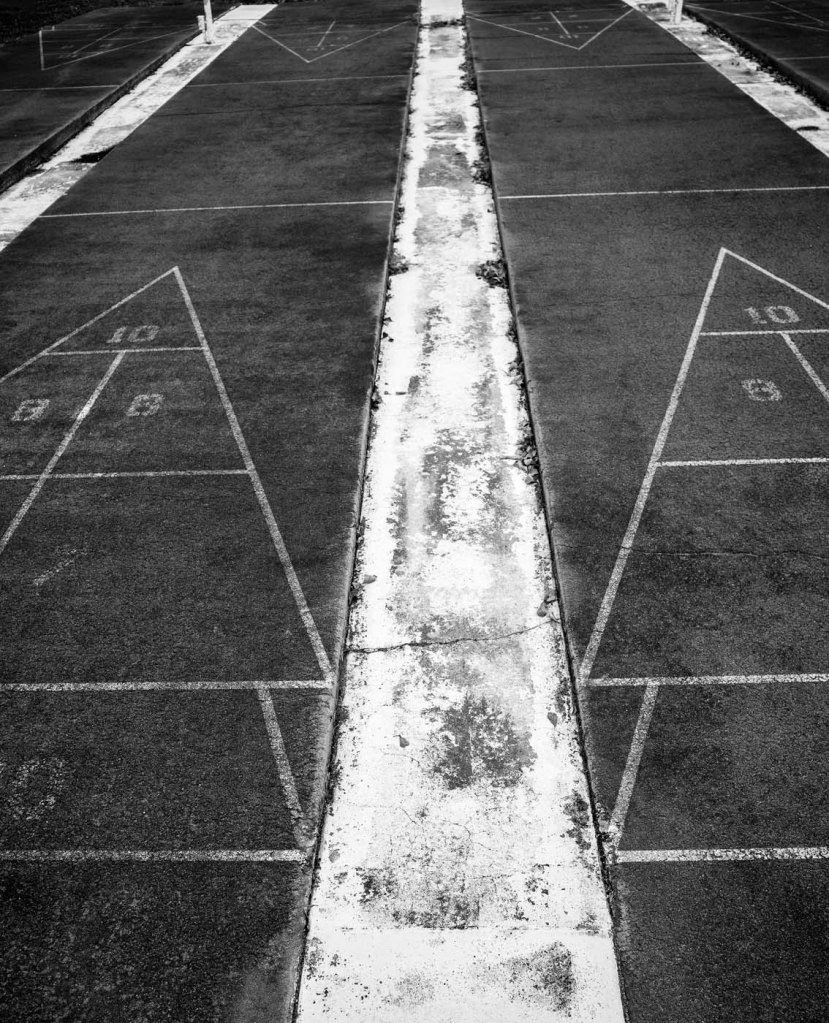
One of my first test images with my Ricoh GR IV monochrome camera.

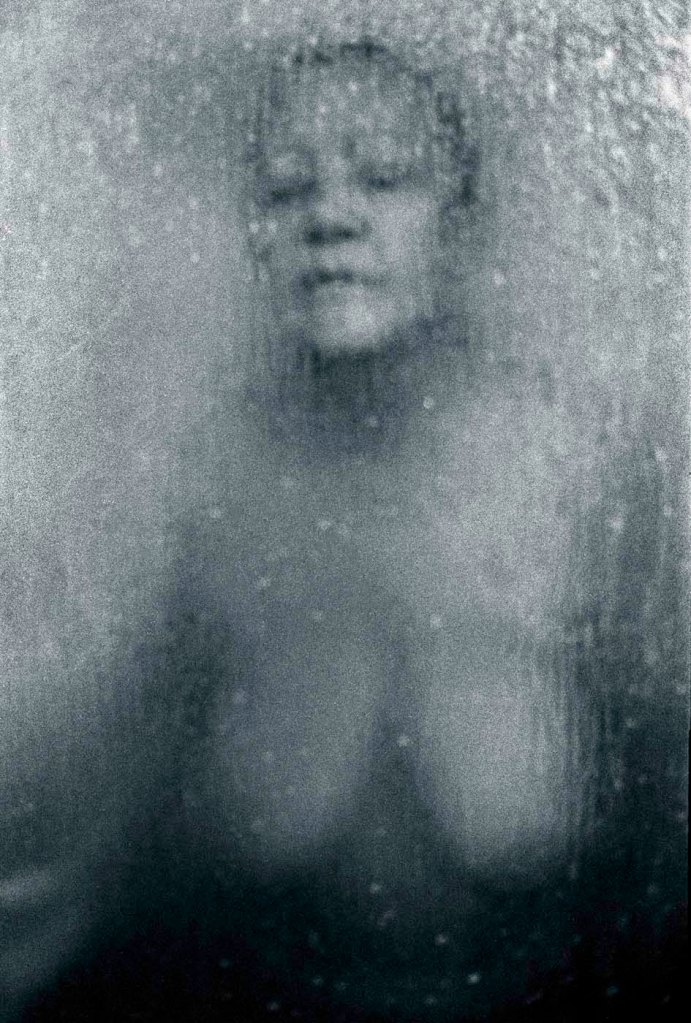
Olympus Infinity Stylus Epic film camera (blue toned black and white image)

Tactile Aspects of Analog Photography

Analog photography is very tactual. I recently was loading large format sheet film into 8 by 10inch film holders which I use in my pinhole camera. It is a very tactile process since it has to be done in total darkness and involves the sense of touch. The film has notches in one of the corners which identify the type of film and also indicates which side is the emulsion side (which has to face out). The dark slide which covers the unexposed film until ready to be used has little bumps along the silver side the top edge which indicates that the film under that side of the slide is unexposed and ready to be used. The other side is black with no notches and this indicates that this film has been exposed. Sounds complicated but the point is that touch is integral to the process.

After I was done loading the film holders, I realized how much I enjoy the tactile sensations experienced in analog photography. The tactile sensations continue through taking the photographs and processing the negatives. Touch is involved in every step.

Whether you are using large format film, medium format or 35mm, touch is essential. Loading exposed film in the dark into a film developing tank in preparation for processing requires touch and dexterity. I use stainless steel developing tanks and reels and I find that the cool smooth touch of the metal is pleasurable. 

It is obvious that analog photography has many more opportunities for tactile stimulation than digital photography. I also use digital capture and processing. Sight rather than touch is the most valuable sense in digital photography. Loading and unloading a memory card along with using a computer screen, a mouse and keyboard is basically the tactual highlights. Touching photo paper is the most tactual thing I do in digital.

Over the decades, I feel that my analog work is far better than my best digital work. I recently attended the NiNPAH (Nude in Nature Photo Art Haven) event where I worked with two models for two hours each. I decided to only use black and white film. I exposed two rolls of 36 exposures with each model which is my usual shooting pace. When working in black and white, I visually interpret the scene into a gray scale. I even prefer to watch old television shows and movies that were filmed in glorious black and white. For me, color photography requires a different mindset and is visually less fulfilling than black and white photography.

For me, the tactility of analog photography has no comparison with digital photography. Perhaps that is why there has recently been more interest in analog. People want more of a hands-on approach. I admit that there are many ways to mess up throughout the analog process. I have made what is probably every mistake possible but that is part of the challenge and the results are rewarding.

I can see why most people prefer digital. It is more full-proof (although I have managed to find ways to screw up).

My final argument for analog is that film cameras are less complicated than digital. My Nikon F100 film camera manual has 111 pages. My Fujifilm 645i medium format film camera is 39 pages. My Nikon D750 digital camera manual is 504 pages. In my analog influenced opinion, digital did not make photography easier.

Digital photography is here to stay for now. I only hope that a small space will continue to exist for the few who still use analog photography and value its tactility.

A recent black and white photograph. All images copyrighted.

Pinhole Camera Photography

It has been two years since I last used my pinhole camera. I made the camera over twenty years ago. It is made out of plywood, a little bit of foam rubber insulation, and a lot of black duct tape to help make it light tight. I use old film holders that I load with 8-inch by 10-inch black and white sheet film. I used brass shim stock and a #9 sewing needle to make the actual pinhole. A friend gave me an old Packard-Ideal shutter that uses a pneumatic bulb attached to a tube to open and close the shutter. I installed small levels on two sides to help keep the camera level. I use a hand- held light meter to get an initial reading but also use a reciprocity chart to help compute a more accurate exposure time. Exposure times are usually in the 7-20 second range which means the subject must try not to move while the film is being exposed. Film has become very costly. A box of 25 sheets is now over $200 US which means that each exposure is $8 per sheet of film.

There are many challenges when using this camera and numerous ways to ruin a sheet of film. Exposures have to be accurate and subjects have to stay very still. There is the threat that a light leak may ruin an image. I have also gotten careless and forgot to return the slide back into the film holder and the film is totally ruined. I have had the shutter not fully open or close which results in another failure. Also, using the pinhole camera requires extra time to set up and post-processing the film can take hours. There is no guarantee that a good image will result from my efforts. I have no idea what I have until the film is developed.

With the potential for failure, the high costs, and the challenges to making a good photograph, the question is: Why do I use a pinhole camera?

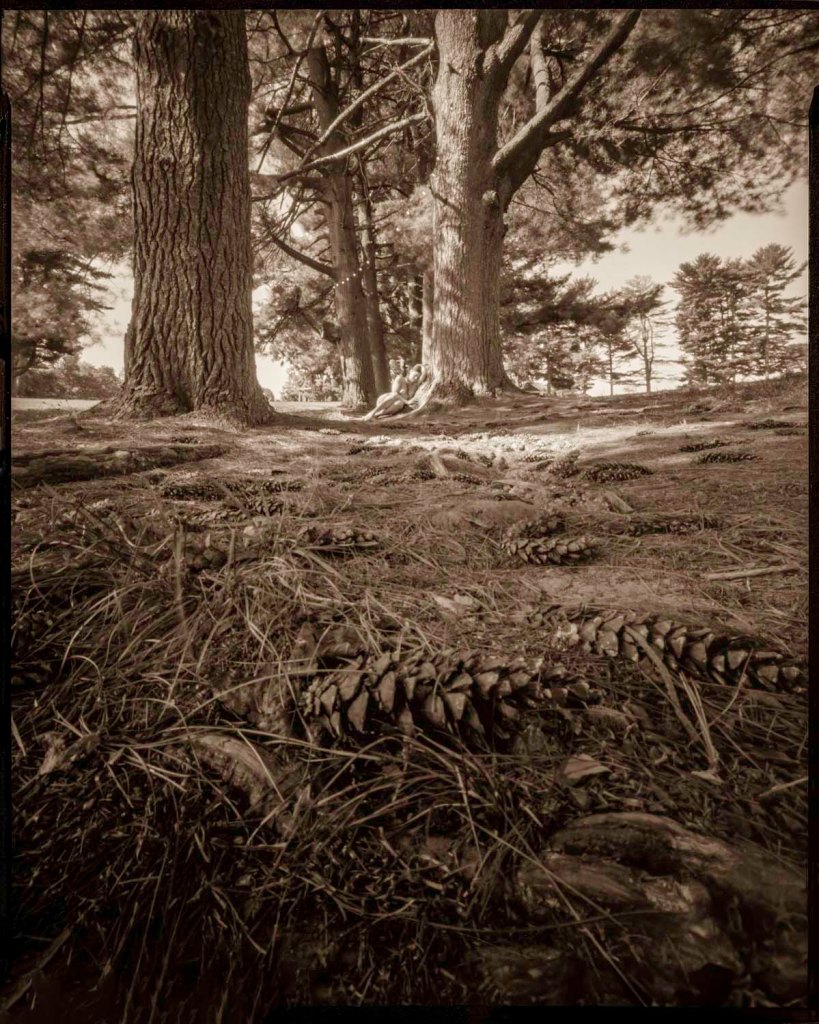
First, I like the way the images look. There is a dream-like softness and ethereal quality to the images. Part of this may be due to the fact there is never a super sharp focus like you get using a camera with a lens. Another quality is there is an infinite depth-of-field from the closest to the farthest object. The angle of view for my camera is very wide. I like the resulting distortion which can make items close to the camera appear stretched. Sometimes accidental movement by the model can add to an image and even an accidental light leak can occasionally benefit an image. I like working with large format film and I like the uncertainty of the results. I set everything up and hope for the best.

Despite all the negative aspects of using the pinhole camera, when everything goes right the resulting photograph is special and one of a kind. It can even be magical.

Pinhole Photograph with Nude